Tuesday, March 20, 2012

Update Your Plate! Create a Striking Salad with a Variety of Nutrients and Colors

Written by Erin Carroll
Part of National Nutrition Month 2012

Many people view salad as either a diet food full of bland vegetables lacking full substance and flavor, or a plate packed full of fat and calories from an overindulgence in fatty dressings and toppings. Salads, however, can easily become a plate full of many balanced colors, textures, flavors, and nutrients. When choosing ingredients for your salad, keep the following tips in mind:

·         It is important to choose fresh, ripe fruits and vegetables, as this will make a big difference in terms of taste and appearance. Food balance is also important to consider, because although it is important to choose several different colors and flavors to use in your salad, choosing too many can be overwhelming for your palate.  

·         The base of a balanced salad is usually a leafy green, such as spinach or romaine. Avoid using iceberg lettuce alone, as it offers little nutritive value. Additional vegetables such as broccoli, tomatoes, carrots, bell peppers, and cucumber can be added, but try to focus on using dark green and orange vegetables for their high nutritive values.

·         If protein is added, choose sources like skinless chicken, tuna, turkey, or tofu instead of processed meats such as salami or bacon that add sodium, fat, and calories.

·         Instead of piling on creamy dressings that contain large amounts of fat and calories, opt for a lighter dressing, like a tablespoon of olive oil and fresh lemon juice each and a dash of pepper instead.
                                                                                                                    
People who frequently eat balanced, nutritious salads have been found to have higher levels of antioxidants, are at a lower risk for diseases, and consume fewer calories during their meal. It’s no wonder that a salad balanced in color and flavor can be an easy, nutritious addition to your plate every day. 


References

Academy of Nutrition and Dietetics. (2011). Eatright.org. Retrieved from:  http://www.eatright.org/

City Salad. [Photograph]. (2010). Retrieved from: http://undressedskeleton.tumblr.com/strikingsalads


Like this post?  Read more Get Your Plate in Shape posts!  

Monday, March 19, 2012

A 'Little Chef' with a Big Idea

Written by Victoria Andersen
Part of National Nutrition Month 2012


For any of us that have seen the movie, “Ratatouille”, we know that it is about a small mouse that becomes a renowned chef. For his final creation, he constructs a Ratatouille dish that has everyone asking for more. But, maybe his culinary masterpiece has more to offer than just a top rating for his restaurant.

As I was browsing through this year’s National Nutrition Month materials, I came across a list of NNM recipes to get people on track to a more “fit” plate. One of these dishes was Ratatouille topped with Quinoa. I have never tasted any version of the dish, let alone cooked it, but I saw how bright and nutrient dense it could be, so I decided to give it a try.

When I was making the ratatouille, it struck me how colorful the dish was. It was popping with red, yellow, green, and even purple! The plethora of colorful vegetables made it a delicious and easy way to get multiple servings of vegetables and a variety of nutrients all at once. Additionally, the dish was topped with Quinoa, a whole grain that is high in protein. This is especially great for any vegetarians out there that need some additional protein in their diet. Finally, it is topped off with cheese, which added some dairy to the dish. All these ingredients combined make for a delicious meal and a simple way to get your plate in shape.

Baked Quinoa Ratatouille
1 tablespoon olive oil
2 cloves garlic, minced
1 red onion, thinly sliced
14 12 – ounce can diced tomatoes with liquid
2 tablespoons tomato paste
1 teaspoon dried basil
12 teaspoon dried oregano
12 teaspoon dried thyme
1 tablespoon chopped fresh parsley
1 large eggplant (about 1 pound) cubed
1 green pepper, thinly sliced
2 zucchini squash, sliced
1 yellow summer squash, sliced
1 cup cooked quinoa
34 cup shredded part-skim mozzarella cheese

1. Preheat the oven to 375 degrees.
2. Heat the olive oil in a large nonstick skillet over medium heat. Add the minced garlic and onion slices, and sauté for 5 minutes until softened.
3. Stir in the diced tomatoes, tomato paste, basil, oregano, thyme and parsley. Continue to cook for 1 to 2 minutes. Remove from heat.
4. Layer half of the tomato and onion mixture in the bottom of a 9x13-inch baking dish. Top with all of the uncooked sliced and cubed vegetables, then add the remaining tomato and onion mixture. Spread the cooked quinoa on top and sprinkle with the shredded cheese.
5. Cover with foil and bake for 40 to 45 minutes. Remove the foil for the last 5 minutes of cooking.


References


Lewis, B. (Producer), and Bird, B. (Director). (2007). Ratatouille (Motion Picture). United States: Disney and Pixar.

Academy of Nutrition and Dietetics. (2012). National Nutrition Month 2012 Recipes. Retrieved from http://www.eatright.org/nnm/


Like this post?  Read more Get Your Plate in Shape posts!  

Get Creative with Your Vegetables

Written by Kristen DeAngelis
Part of National Nutrition Month 2012


Sometimes it can be a challenge to introduce new veggies to your plate. It takes consistency, variety, cooking methods and patience. Did you know it takes 15 times to try something new before your tongue decides if it likes it or not? While adding new ingredients to your plate here are some helpful ways to get the extra nutrition from vegetables through foods you already love:
-          Pasta Sauce – shred carrots, zucchini, red pepper, mushrooms and add to your average tomato sauce to serve over pasta

- Lasagna – spinach, broccoli, bell peppers, zucchini, carrots

- Chili and meat loaf (chop/dice peppers, onion, carrot, cabbage)

- Hamburger: Puree cooked squash and carrots or finely chop mushrooms/peppers/onion to add small amounts to ground beef/turkey

- Stir-Fry – add as many vegetables to chicken/beef/seafood

- Muffins/quick breads (grated carrots, zucchini, mashed squash, sweet potatoes)

- Soup - sneak leftover vegetables into your favorite soup (mushroom, celery, peppers, onions, etc.)

- Burrito/Fajitas - Use wraps to hide all that is inside - mash up beans to spread with sautéed vegetables and cheese. Heat for a disguised “fast-food burrito”

- Frittata/Omelet – spinach, tomato, onion, mushroom, olives,

- Melt cheese on top of vegetables before serving

o Broccoli and cheese

o Homemade vegetable pizza

- Dips – use celery/carrots/pepper slices to dip into


- Salsa – add extra bell peppers/onions to use for spicing up any combination of foods

Remember, not all vegetables have to be served bland and alone … spice them up with new spices, marinades, and by throwing into any combination of foods! As always though, beware of trapping your veggies with too much fatty dressings, cheese, or extra grease from the foods you prepare. You will be surprised where you can hide and get in your extra serving of veggies!

References

Asparagus tips. (2010). [Web Photo]. Retrieved from http://www.freedigitalphotos.net/images/Vegetables_g63-

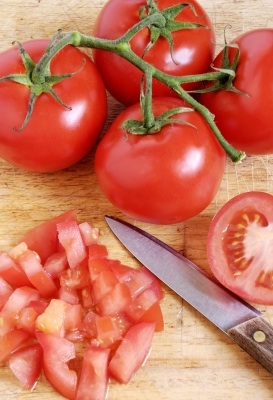
Chopped tomatoes. (2010). [Web Photo]. Retrieved from http://www.freedigitalphotos.net/images/Vegetables_g63-Chopped_Tomatoes_p20092.html 


Like this post?  Read more Get Your Plate in Shape posts!  

Saturday, March 17, 2012

No Office Hours on Monday

Just FYI:  I will not be holding my normal HNFE Office Hours on Monday, March 19.  Instead, I will be teaching an FDI session on "Tools and Strategies for Managing Your Research."  This is an encore presentation that will be very similar to the FDI session I taught and blogged about last fall.  Right now, the class is full, but if you're interested in hearing more about the "tools and strategies" we'll be discussing, just let me know!

I'll be back to my regularly scheduled Office Hours in Wallace Atrium on Monday, March 26.  In the meantime, don't hesitate to send me an email at hnfelibrarian@vt.edu if you have any questions or other research needs!

Friday, March 16, 2012

Simple Steps for Veggie Success!

Written by Emily Kurlak
Part of National Nutrition Month 2012


As a busy college student living off-campus, it can be really challenging to prepare meals that meet MyPlate’s guiding criteria. While I can easily fulfill the fruit/grain/dairy/protein suggestions, I struggle with vegetables. Let’s face it, vegetables can be bland. They require washing and chopping. They create dirty dishes. They often rot in the refrigerator if not quickly used.

But, the cost of preparing vegetables is far outweighed by the benefits of eating them. Veggies are nutrient dense, meaning that for the small amount of Calories they contain, they are filled with a large amount of nutrients needed by the body. Potassium, Vitamin A, Vitamin C, and fiber are just a few examples of these nutrients. Potassium helps to regulate blood pressure. Vitamin A promotes eye health. Vitamin C acts as an antioxidant to quench damaging free radicals. Fiber helps to maintain proper bowel function.

So, if you face similar difficulties in getting enough veggies, I have a few tips. Don’t make it so hard for yourself! If a recipe calls for fresh chopped vegetables, try to get a similar frozen variety. For example, I swapped out fresh yellow pepper and onion for a bag of frozen pre-chopped red, green, and yellow bell peppers with onion in the chicken curry pictured above. Not only did I save myself time and money, but I also increased the variety of my veggies! Make them a snack during the week by taking baggies of baby carrots, snow peas, or celery sticks to munch on between classes. Keep veggies interesting by mixing them in with your main dish (like in a stir fry), adding spices and flavorings, or topping with nuts like slivered almonds. 

Simple steps, like these, can transform how you eat. Do you have more ideas? Comment below, I’d love to hear them!

References

USDA. (n.d.). ChooseMyPlate.gov. Retrieved from http://www.choosemyplate.gov/food-groups/vegetables-why.html 


Like this post?  Read more Get Your Plate in Shape posts!  

Thursday, March 15, 2012

VT Libraries Edible Books Contest!

Do you like food?  Do you like books?  Then you MUST join us for our first official Edible Books Contest at Virginia Tech's University Libraries on Friday, March 30 from 2-4 p.m.  
Just what is an Edible Book Contest (aka an Edible Book Festival)? 
A winner from 2011:  Madeline


Edible book contests are about being creative with books and food. Entries can look like, poke fun, interpret, or highlight a book or element of a book. Entries can be sweet, savory, salty, bitter...anything! You can see images from our Newman Library pilot program in 2011 on the Newman Library Flickr site


Many libraries host similar events and you can find other examples on the web.


If you would like to enter the contest, visit the website for the contest:  http://tinyurl.com/VTEdibleBooks2012 


A 2011 favorite:  Make Way for Dumplings


Contact me--Rebecca Miller (millerrk@vt.edu), and/or Kira Dietz (kadietz@vt.edu) if you have questions about the rules, the form, or the event! We can't wait to see you Friday, March 30, 2012 in Torgersen Hall, Room 1100! 

Wednesday, March 14, 2012

Keeping the Color in your Vegetables!

Written by Elaine Twigg
Part of National Nutrition Month 2012

Vegetables are an important part of our diet, largely because many are either good or excellent sources of a variety of nutrients.

But did you know that the way you prepare your vegetables would drastically alter how many vitamins you are actually getting from them? Cooking losses can occur during many methods of cooking depending on how water-soluble the vegetable is, how much water it is cooked in, how high of a temperature the vegetable was cooked to, and how long it was held at that temperature.

Tips for preserving nutrients in your vegetables:

• Steam, broil, or microwave your vegetables instead of boiling them! You want to cook your vegetables in as little water as possible.

• Buy fresh produce instead of canned! Canned vegetables undergo a lot of heat processing, causing a loss of a lot of their nutrients.

• Serve your cooked veggies as soon as possible! The longer they sit, the more nutrients will be lost.

• Eat your veggies raw!

• Store your veggies in the fridge! Leaching of nutrients and wilting occurs at higher temperatures.

To demonstrate, I steamed one 12 oz. bag of broccoli and boiled the other 12 oz. bag of broccoli. Can you see the difference?


Here, you can actually see the color that has leached from the broccoli into the cooking water!  

Like this post?  Read more Get Your Plate in Shape posts!